Why It Stands · No. 8
Burj Khalifa
How an 828-Metre Tower Stands on Sand and Beats the Wind
The video premieres on YouTube on 13 December 2026. The full article is below.
 Premieres 13 December
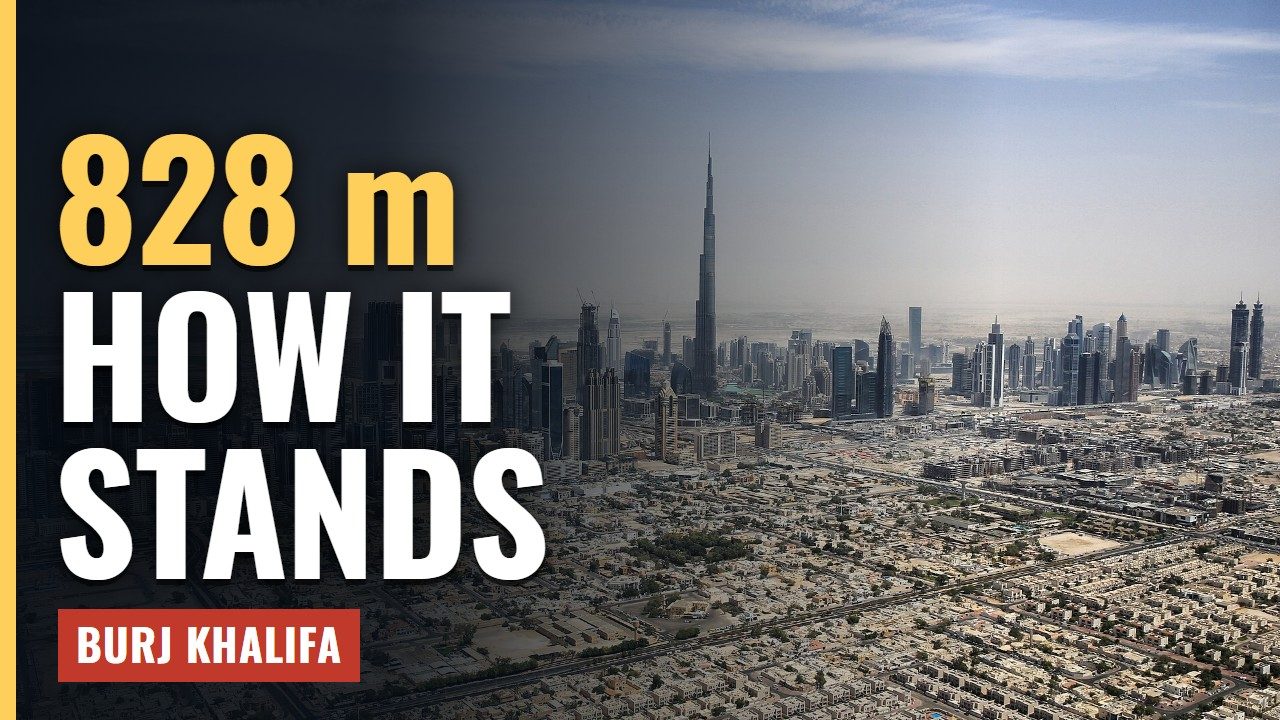
Burj Khalifa is 828 metres tall, and it stands on sand and weak rock with salty water in the ground. At that height the main enemy is not weight. It is the wind.
This video explains what holds the tallest tower in the world in the ground (192 friction piles and a thick raft), why its plan is a letter Y, and how its spiral of 27 setbacks "confuses the wind" so that the whirls of air never join into one big push.
The full story
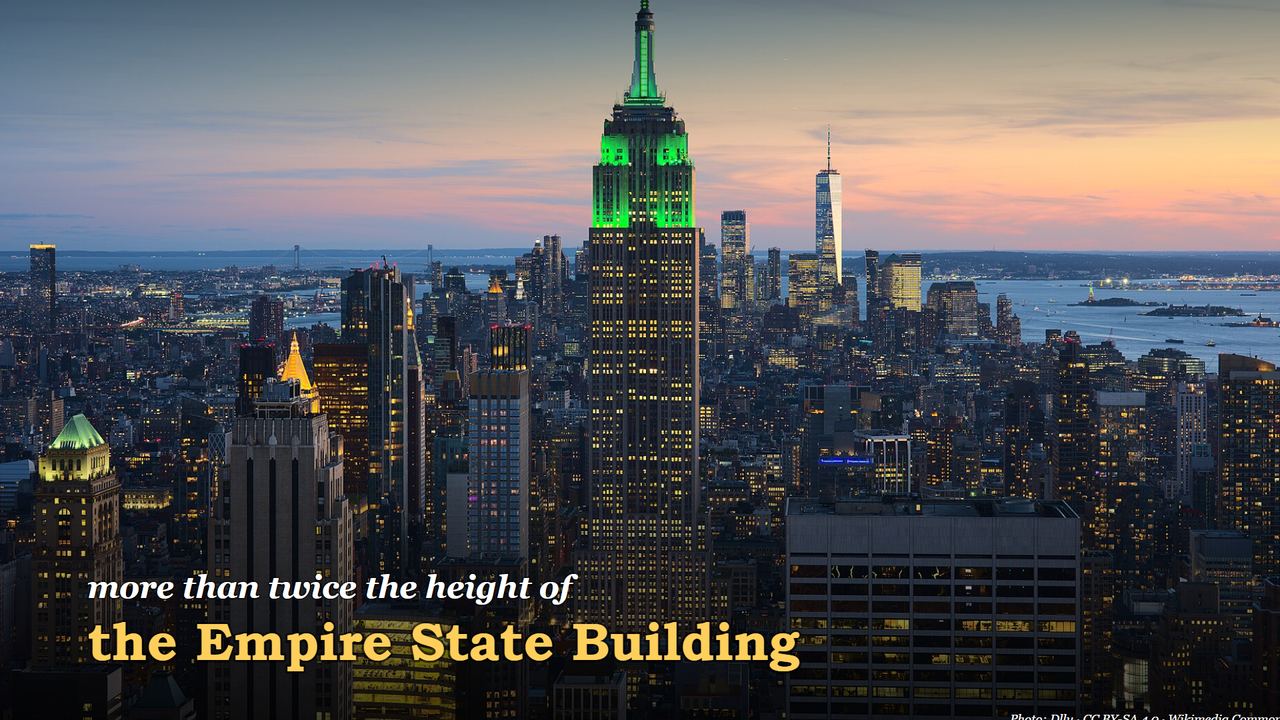
828 metres. More than twice the height of the Empire State Building. It stands in a desert, on sand and weak rock, with salty water in the ground. When Burj Khalifa opened in 2010, it beat the old record by more than 300 metres.
At that height, weight is not the main enemy. The wind is. This is the story of what holds the tallest tower in the world in the ground, and how its shape keeps the wind from ever getting a grip on it.
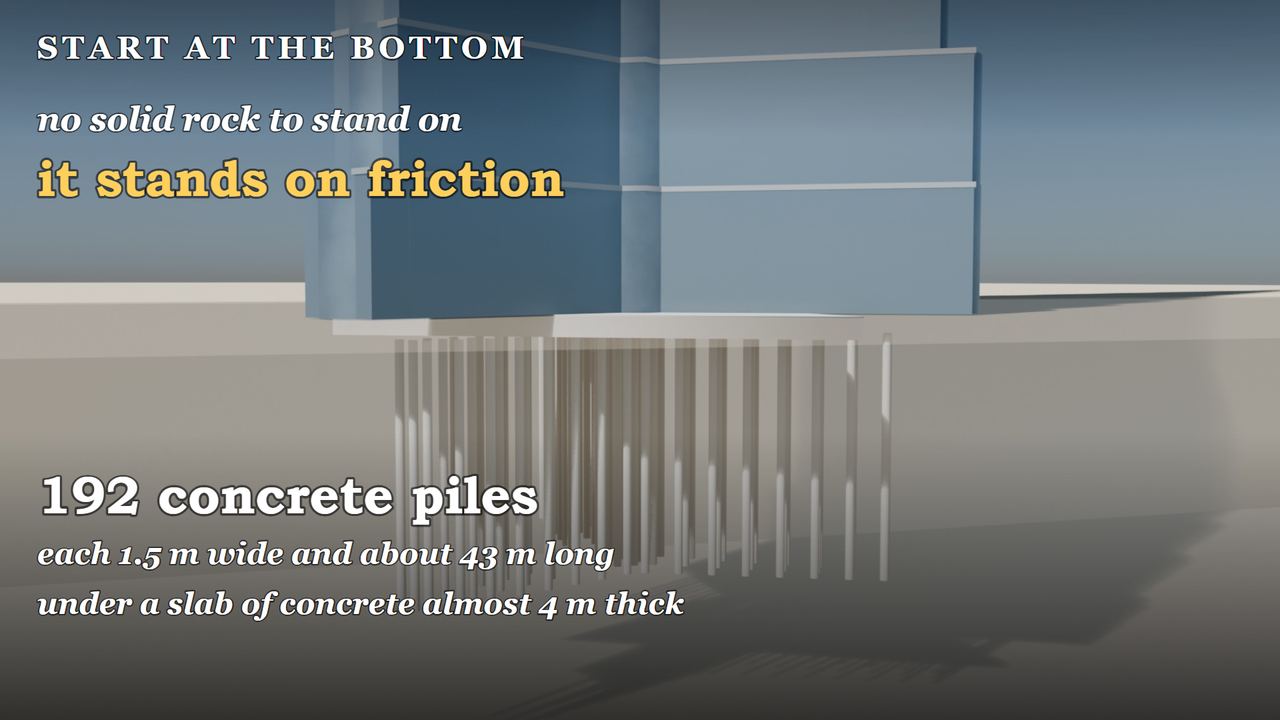
Start at the bottom. Under Dubai there is no solid rock to stand on. So the tower stands on friction. Below it are 192 concrete piles. Each one is a metre and a half wide and about 43 metres long. On top of them sits a slab of concrete almost four metres thick. The piles do not rest on anything hard. They hold by rubbing against the ground along their whole length, like a nail in a piece of wood.
And the ground water is full of salt, which eats steel. So the concrete was made very dense, and the steel inside the foundation is protected by a small electric current that stops it from rusting.
Now look at the tower from above. Its plan is a letter Y. In the middle there is a six-sided core of concrete, and three wings grow out of it. Each wing leans on the other two, like the legs of a tripod. The engineers call it a buttressed core. It is very hard to bend, and very hard to twist.
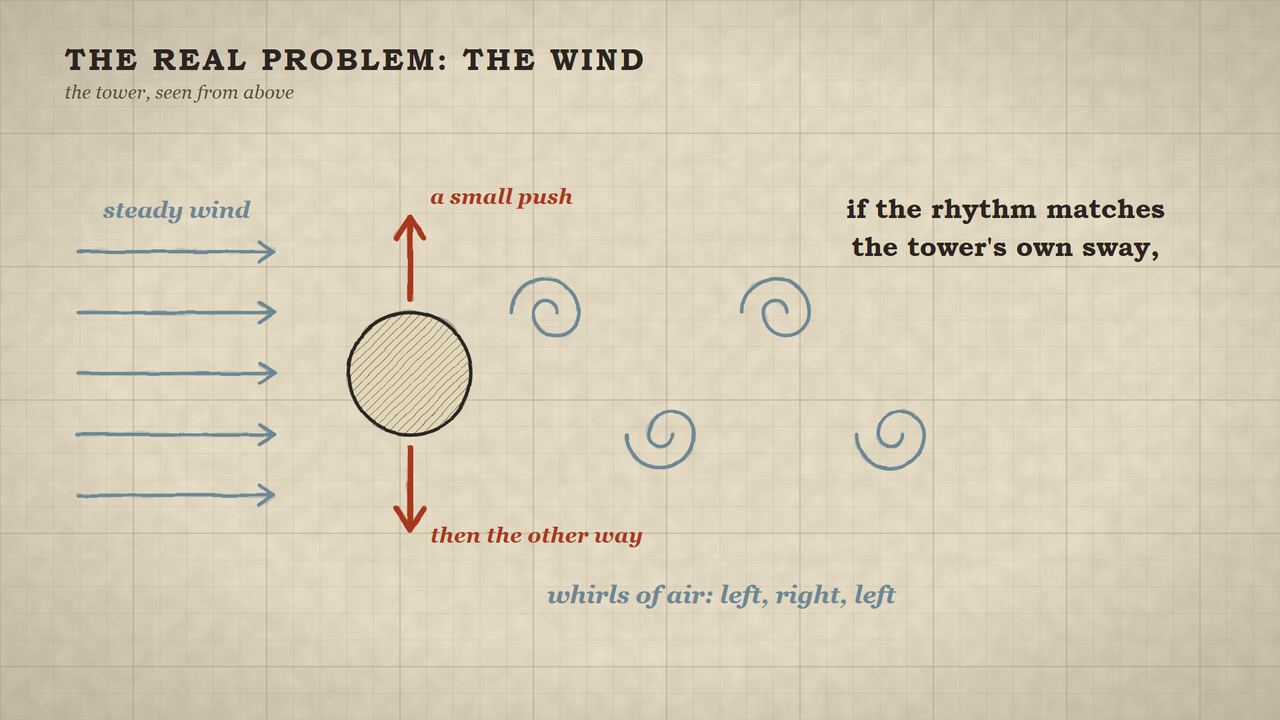
But the real problem is the wind. When a steady wind flows past a tall tower, it does not just push. It breaks into whirls of air, which peel away from the left side, then from the right, then from the left again. Each one gives the tower a small sideways push. If that rhythm matches the tower's own sway, the movement grows, like a child on a swing who is pushed at just the right moment.
The answer of the engineers was to confuse the wind. As the tower rises, its shape keeps changing. The three wings step back, one after another, in a spiral: 27 steps in all. So at every height the tower has a different width, and the whirls form at a different rhythm. They never join together into one big push. The shape was tested again and again in a wind tunnel before a single pile was drilled.
The tower still moves. At the very top, it can sway by about a metre and a half. That is normal, and the people inside do not feel it.
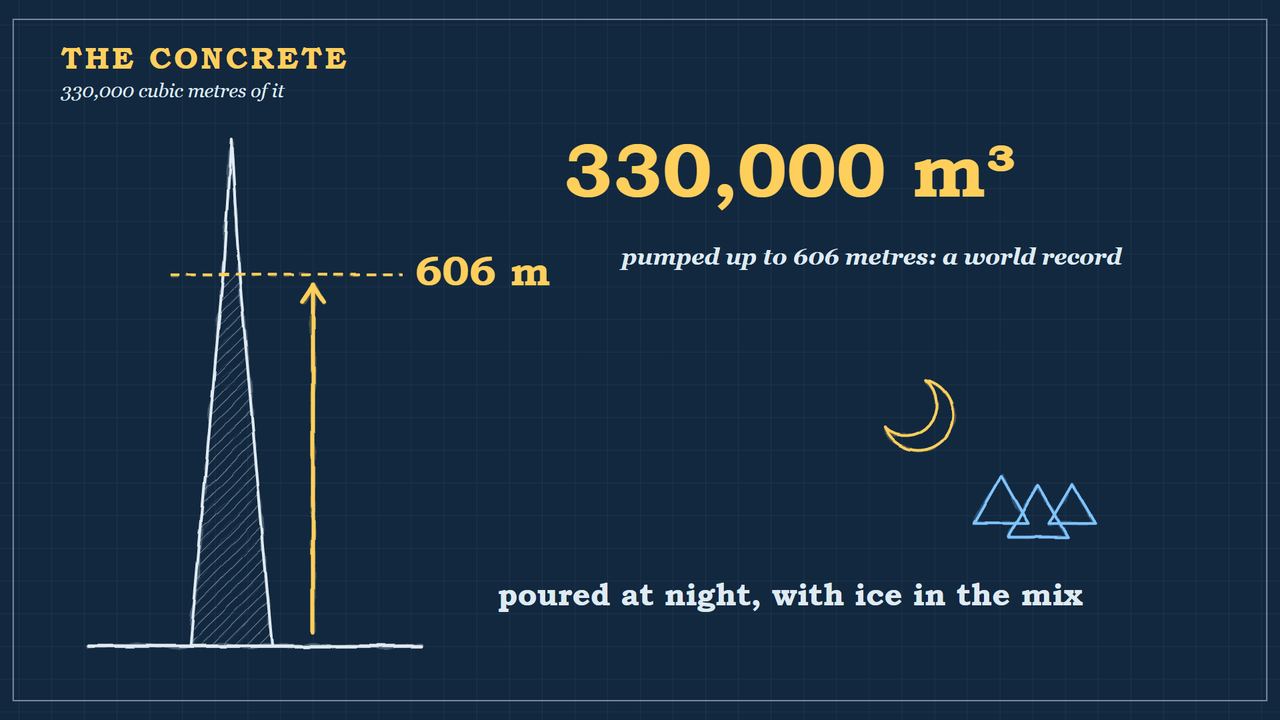
Then there was the concrete: 330,000 cubic metres of it. It was pumped up to a height of 606 metres, which was a world record. And because Dubai is so hot, it was poured at night, with ice in the mix, so that it would not crack as it hardened.
Above that height, the concrete ends. The top of the tower is a spire of steel, more than 4,000 tonnes of it. Its central pipe was put together inside the building, and then pushed up from within, like a telescope.
The whole tower took six years to build, and cost about one and a half billion dollars. A tower one kilometre high is now being built in Saudi Arabia. Until it is finished, Burj Khalifa is still the tallest structure that people have ever made.
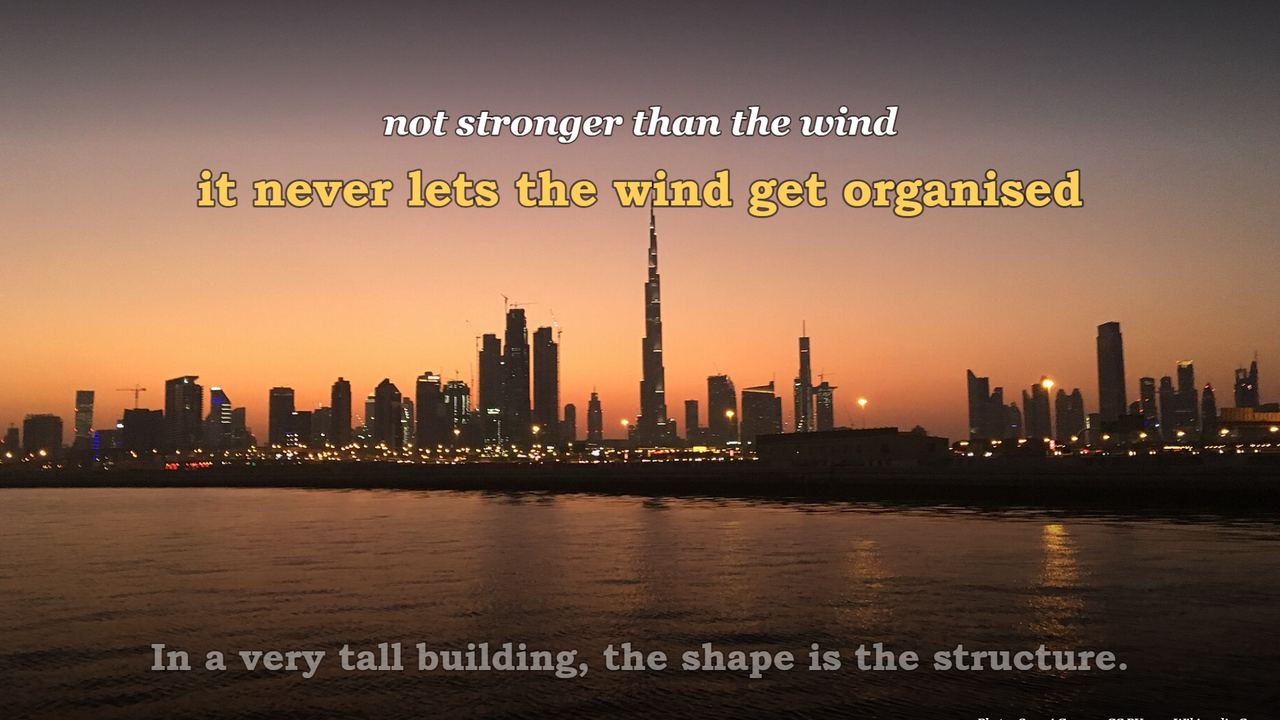
And it did not get there by being stronger than the wind. It got there by never letting the wind get organised. In a very tall building, the shape is the structure.
This is The Bending Moment. Thank you for watching.
The Guide
How to Read Structural Drawings
One beam, B2, followed from the plan to the section, the schedule and the general notes, then decoded in the six rebar notations you will meet on real sets.
#5H1616ØT16Ø16N1661 pages · 12 exercises with answers · about 100 abbreviations · PDF
Sources
- the Wikipedia article "Burj Khalifa" and the works it cites.
Photo credits
- Burj Khalifa: Laika ac, CC BY-SA 2.0
- Empire State Building: Dllu, CC BY-SA 4.0
- Dubai from the air: Rainer Halama, CC BY-SA 4.0
- Burj Khalifa at sunset: RajeevRampal, CC BY-SA 4.0
- Dubai skyline: Tim Reckmann, CC BY 2.0
- Dubai skyline at dusk: Sergei Gussev, CC BY 2.0
Photos from Wikimedia Commons under the licences listed. All drawings are original.
The narration uses an AI clone of the author's own voice. All drawings are original.